
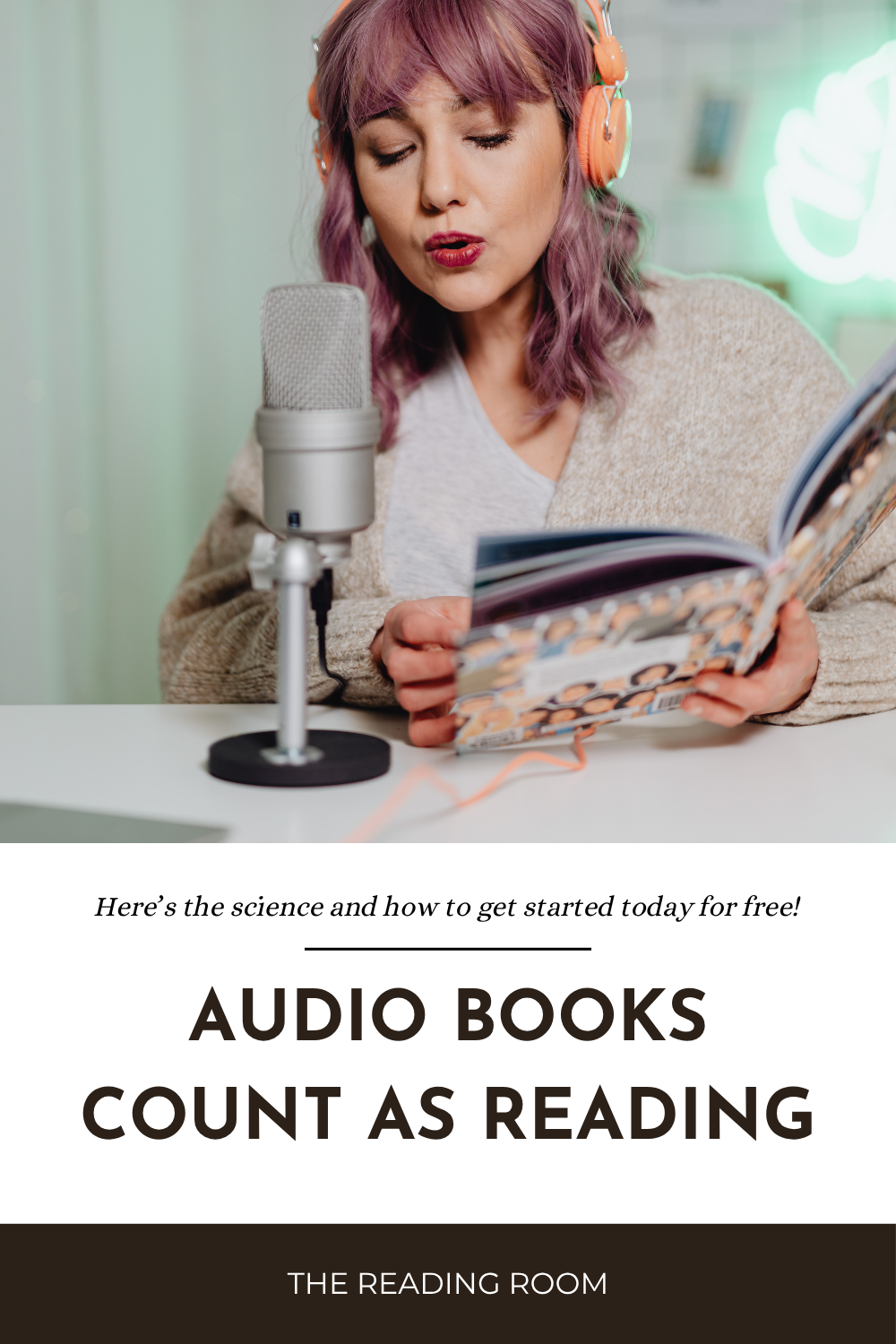
I hear it all the time from parents, educators, and even my own friends who are trying to get back into books: “Does listening to an audiobook actually count as reading?” Usually, there is a bit of guilt behind the question. People feel like they are looking for a shortcut or somehow cheating the system by not using their eyes to scan a page.
Let’s clear the air right now. Yes, it counts.
As someone deeply rooted in the world of books and gifting with joy, I am here to tell you that your brain does not have a “lesser than” category for stories that enter through your ears instead of your eyes. Whether you are folding laundry, commuting to work, or your kids are in the backseat on a long road trip, a story is a story.
First: Does Listening Actually Count as Reading?
Yes. I know that might be the thing you came here to find out, so let’s settle it right at the top.
Listening to a book is reading. The cognitive processes involved are, in the words of psychologist Daniel T. Willingham, essentially the same. Once you’ve mastered the mechanics of decoding print. Both listening and reading require comprehension, vocabulary knowledge, inference, memory, and imagination. Your brain does the same work either way.
Children’s audiobook use has increased 138% since 2018. Adults are listening in record numbers. And the research keeps coming back with the same conclusion: this is real reading.
The one nuance worth knowing: for young children who are still learning to decode print (roughly ages 5–8), audiobooks should supplement, not replace, the work of learning to read on paper. Decoding is a skill that requires practice with text. But for everyone who has moved past that stage? Listening and reading are, as I like to say, nutritionally equivalent. Think of audiobooks as simply a different vehicle to the same destination.
The Literacy Gains Are Real
If you are a parent wondering if audiobooks are “lazy” for your kids, the research suggests the exact opposite. Audiobooks are a massive win for literacy development across all ages.
Here’s what the research from Reading Partners, the National Literacy Trust, and the Audio Publishers Association’s Sound Learning initiative tells us about what listeners actually gain:
Vocabulary Growth and Pronunciation
Professionally narrated books introduce kids and adults to sophisticated vocabulary in context. This is one of the most effective ways to acquire new words. Beyond just knowing the word, listeners hear the correct pronunciation, which is especially valuable for English language learners or kids tackling complex subjects.
Comprehension and critical thinking.
Following an audiobook plot requires the same inferencing, prediction, and analysis as reading. In some studies, students discuss books at higher levels after listening than after reading the same text silently.
Bridging the Gap
A child’s listening comprehension is typically two to three grade levels above their actual reading level. Audiobooks allow them to engage with richer ideas and more complex plots than they could handle in print alone. This keeps their motivation high and helps them identify as “readers” even if they struggle with the physical act of decoding a page.
Fluency modeling.
When children hear a skilled narrator, they are learning the rhythm, phrasing, and tone of a story. These skills transfer directly to their own ability to read aloud with expression.
Empathy and Focus
Following an audiobook requires sustained concentration, which builds foundational academic stamina. Furthermore, hearing diverse narrators and characters builds perspective-taking and emotional intelligence just as print reading does.
Motivation
Children who listen to audiobooks are significantly more likely to identify as readers, seek out more books, and eventually reach for chapter books too, in their own time, without being forced.
For adults: reading in any format is associated with lower rates of depression, improved empathy, greater life satisfaction, and slower cognitive decline. Audiobooks make all of this accessible to people with busy schedules, visual impairments, dyslexia, ADHD, or any other barrier to print reading.
For seniors: research published in Basic and Clinical Neuroscience (indexed by the NIH) shows that regular narrative listening enhances brain plasticity, supports language and memory, and may delay the onset of cognitive decline. Following a story, remembering characters, tracking plot, this is genuine brain exercise. And the narrator’s voice is companionship. That matters enormously.
Benefits by Age: What the Research Says
Ages 1–7: This is when the foundation is laid. Reading aloud and listening to audiobooks are among the most powerful early literacy activities a parent can provide. Hearing stories, through your own voice or a narrator’s, builds vocabulary, narrative comprehension, and a love of books before a child can decode a single word. For this age, listen together. Pause. Talk. Point at pictures. The audiobook models the fluent, expressive reading you want your child to internalize.
Ages 8–12: This is the golden age for audiobooks. Children’s listening comprehension outpaces their reading level, which means audiobooks open doors to books that would otherwise be frustrating to attempt. Audiobooks keep motivation high during the difficult middle years when many kids start to disengage from reading. The Everyday Reading community has been talking about this for years, family audiobooks on road trips are practically a tradition at this point.
Ages 12–18: Teens are the group most likely to say they hate reading and the group most likely to become audiobook converts once they try. Research shows audiobooks engage reluctant teen readers in ways that print often can’t, particularly boys. Teens listen while exercising, commuting, doing chores. Their total reading volume goes up dramatically. According to American Libraries Magazine, 61% of young adults say audiobooks help them understand a subject. That number should be on every parent’s refrigerator.
Adults: Audiobooks turn the lost time of daily life into reading time. The 45-minute commute. The evening walk. The folding of laundry that you’ve been putting off. Adults who listen to audiobooks read more books overall. And for adults who have always wanted to be “more of a reader” but can’t seem to find the time, audiobooks are often the answer.
Seniors: Beyond the cognitive benefits, there’s something worth saying plainly: audiobooks reduce loneliness. A narrator’s voice, read consistently, over hours, it’s companionship. For seniors who live alone, who can no longer hold a book comfortably, whose eyesight has changed, audiobooks provide full access to literature and all the joy and engagement that comes with it.
How to Actually Get Started
If you are ready to jump in, your first experience matters. A bad narrator can ruin a great book, so I always suggest starting with a “sure thing.”
Here are some community favorites and highly researched recommendations from the Pathfinder to get you started.
For the Kids (Ages 6-12)
- Ways to Make Sunshine by Renée Watson: This is a warm, joyful story perfect for fans of Ramona Quimby.
- Tress of the Emerald Sea by Brandon Sanderson: This is a full-cast production with original music and sound effects. It is a stunning, immersive experience for the whole family.
- Peter and the Starcatchers by Dave Barry & Ridley Pearson: Narrated by Jim Dale, this is a road trip staple that reimagines the Peter Pan story.
For the Teens
- The Hunger Games by Suzanne Collins: This is one of the most popular teen audiobooks for a reason. It is gripping from the very first chapter.
- The Hitchhiker’s Guide to the Galaxy by Douglas Adams: Narrated by the legendary Stephen Fry, this is a perfect entry point for reluctant teen readers because it is funny and strange.
For the Adults
- The Four Winds by Kristin Hannah: Narrated by Julia Whelan, who is widely considered one of the best voices in the industry. If you see a book narrated by her, it is usually a safe bet.
- Atmosphere by Taylor Jenkins Reid: This set in the 1980s space shuttle era and features excellent pacing that translates beautifully to audio.
- Educated by Tara Westover: A moving memoir that is even more compelling when heard.
Start free. Right now.
Before you spend a dime, check your local library. Your library card gives you free access to thousands of titles right now through apps like Libby and Hoopla.
- Libby: This is the premier library app. It connects to your library account and lets you borrow books instantly.
- Hoopla: This app often has no waitlists, meaning you can get instant access to titles for browsing and discovery.
- Playaway Devices: Many libraries also carry these small, pre-loaded players that don’t require any tech or apps at all. They are perfect for kids or seniors who want a simple experience.
When you’re ready to invest:
- Audible ($14.95/month) — the largest selection in the world. Everyday Reading’s Janssen Bradshaw uses it daily at her house, and her community’s favorite audiobooks of 2025 are full of Audible picks. Monthly credit buys one audiobook you own forever. (Affiliate link)
- Libro.fm ($14.99/month) — same audiobooks, same price, but your purchase supports independent bookstores instead of Amazon. This is the one I recommend if you want to shop with your values.
- Spotify — if you already subscribe to Spotify Premium, you get 15 hours of audiobooks per month included. No extra cost.
How to Become an Audiobook Pro
A few things that will make your first experience much better:
Choose something you already love. Your first audiobook should be a sure thing — pick a genre or subject you already enjoy. This is not the time to branch out into experimental literary fiction.
Sample the narrator before you commit. Every audiobook platform lets you listen to a few minutes before downloading. Do this. A narrator you love will carry you through even slow chapters. A narrator you can’t connect with can ruin a book you’d otherwise love.
Keep your hands busy: This is the single most consistent advice from audiobook devotees: listen while doing something physical. Walking, cooking, folding laundry, commuting. Your hands stay busy, your mind stays engaged, and you end up reading while doing things you had to do anyway.
Adjust the speed: You do not have to listen at the default speed. Most apps let you speed up the narration to 1.25x or 1.5x once you get comfortable.
Go unabridged: Always choose the unabridged version so you don’t miss any of the original content.
Don’t give up after one bad experience. Narrator fit is personal. Genre matters. The right audiobook will feel like a gift, but you might have to try a few to find it.
Don’t be afraid of the DNF List: If you start a book and just can’t finish it, turn it off and add it to your Did Not Finish List with no regrets. I’ve gotten halfway through an audiobook before and just couldn’t keep going. So I didn’t. I don’t have time to waste on bad books!
For kids: Janssen Bradshaw at Everyday Reading recommends giving kids something to do with their hands while listening, like coloring, building, drawing. It dramatically improves how long and how well they focus.
Your Library Is Your Best Audiobook Resource
I want to end here, because I think it’s the thing people most often don’t realize.
Your library card is one of the most powerful tools for audiobook access in existence. Libby and Hoopla give you free access to thousands of titles. Your library may also have physical audiobook CDs, Playaway devices (preloaded audiobook players that require no technology, perfect for seniors or anyone without a smartphone), and librarians who can match you to your perfect first listen.
Ask at the desk. Tell a librarian you’ve never tried an audiobook and you don’t know where to start. I promise you’ll walk out with a plan.
This format is for everyone. Including you.
Sources:
- National Literacy Trust, Audiobooks and Literacy (Rapid Review, 2020). ERIC/DOE database.
- Reading Partners, Listen and Learn: How Audiobooks Can Support Literacy Development (readingpartners.org).
- Reading Rockets, Benefits of Audiobooks for All Readers (readingrockets.org).
- Audio Publishers Association, Sound Learning: Why Audiobooks (audiopub.org).
- The Impact of Audio Books on Elderly Mental Health, Basic and Clinical Neuroscience (PMC/NIH).
- Everyday Reading (Janssen Bradshaw), 19 Favorite Audiobooks of 2025 and 25+ Best Audiobooks for Family Road Trips (everyday-reading.com).
Leave a Reply